Saffron Extract in Memo Volt
The stigma of Crocus sativus, and the one ingredient here with real human memory trials behind it.
This is the ingredient the whole product rests on, and the only one whose inclusion needs no special pleading.
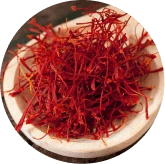
What it is
Saffron is the dried stigma of the Crocus sativus flower, harvested by hand, which is why it is the most expensive spice by weight in the world. The compounds that matter here are crocin, crocetin, picrocrocin and safranal. Crocin and safranal both cross into brain tissue in animal work and both show serotonergic activity, which is the most likely route to any effect you would notice.
What the research shows
Saffron has been tested in randomised, placebo-controlled human trials for two things: low mood and mild age-related cognitive complaints. The cognitive trials generally used 28 to 30mg a day of a standardised extract, ran between 16 and 22 weeks, and measured against instruments such as the ADAS-Cog and RBANS. Several reported statistically significant but modest improvements against placebo. The mood literature is larger and more consistent, with several trials finding effects comparable to low-dose conventional treatment over six to eight weeks. That matters for a memory product because low mood impairs attention and encoding, so lifting mood can look like lifting memory from the inside.
Limitations
Trial sizes have generally been small, many were conducted by groups with commercial links to saffron extract producers, and the effect sizes are modest rather than dramatic. Crucially for Memo Volt, every one of those trials used a disclosed, standardised dose. A proprietary blend gives you none of that assurance.
Dose in Memo Volt: undisclosed. Human research uses 28–30mg/day standardised extract. Because the label is a proprietary blend, there is no way to know whether the capsule contains that amount, a fraction of it, or a trace. This applies to every ingredient in the product and is explained in full on our evidence page.
Safety and interactions
Well tolerated at supplement doses. High doses (above roughly 1.5g daily) are toxic and doses approaching 5g are dangerous, though those are far beyond anything in a capsule. Avoid in pregnancy, where high-dose saffron has been associated with uterine stimulation. May add to the effect of antidepressant medication, so tell your prescriber if you take one.
Our verdict
The one ingredient here with a genuine claim to being in the bottle for a reason. Whether it is present at a working dose is the unanswered question that defines the whole product.
Sources
- NIH Office of Dietary Supplements — ingredient fact sheets
- MedlinePlus — herb and supplement monographs